Media kit
Looking for our logo, visual assets, or our brand book?
Check out our media kit!
Empowering enterprise modernization with Identity Orchestration
Seamlessly integrate your web-applications with , simplifying identity processes without modifying your apps. Explore common use cases of Identity Orchestration.
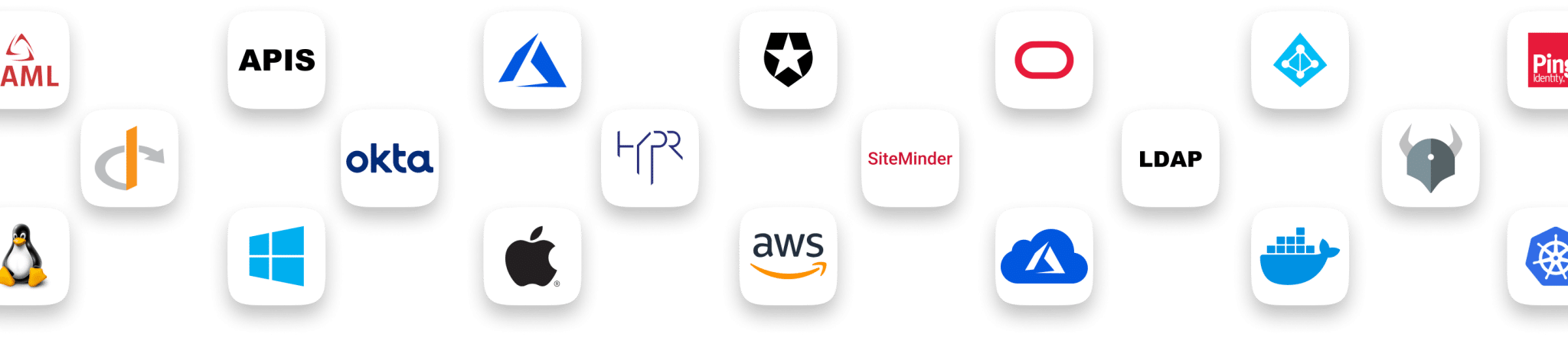
Integrate your clouds, your IAM existing investments, and applications.
PLATFORM CAPABILITIES
Maverics Identity Orchestration Platform capabilities
Modernize apps or IDPs
Switch clouds, scale your architecture, swap out a new IDP, or deploy the next big thing so you can build a more resilient, efficient business — without touching your apps.
Add MFA & Passwordless to any app
Use modern authentication to secure any application in hours — with no code or rewrites. And upgrade the security of your apps in minutes while you’re at it.
Protect access to critical local apps
Deploy an always-on solution that protects against outages even when internet connectivity is lost due to natural disasters and unforeseen circumstances.
Easily control multi-cloud access
Manage app access both in public and hybrid clouds, enforce consistent access across multiple platforms, and reduce risk by avoiding a single point of failure.
Build no-code multi–vendor user journeys
Orchestrate user journeys through multiple identity steps, across identity services to deliver a delightful, seamless, and secure experience — just in time — from anywhere.


IDENTITY ORCHESTRATION RECIPES
Need to solve hard, multi-vendor integration problems with ease? There’s a recipe for that.
Take a look at how the world’s leading companies are easily solving similar challenges right now. Or bring us your toughest identity challenges, and we can help you find the perfect way of using orchestration recipes for your unique identity fabric.
Secure & control cross-border access to a global resource
Keep your employee data sovereign, local and resident. Support your multi-national operations with region-specific IDPs that give users controlled access to common apps.
How to add modern authentication to any app still using NTLM over LDAP for authentication
Still using Active Directory to authenticate users? Secure your legacy mission-critical apps with a modern IDP instead — without refactoring.
How to move from your legacy IDP to CyberArk Identity without refactoring a thing
Break up with your outdated IDP, keep the complex access policies you love, and replace it with modern authentication and passwordless protection from CyberArk Identity — all without rewriting your apps.
What can Identity Orchestration do for you?
What is Identity Orchestration? The complete guide
Everything you need to know about building your identity fabric and orchestrating multi-vendor identity flows Multi-cloud identity management is hard. What if it doesn’t have to...
Extend Microsoft Entra ID to complex apps with Identity Orchestration
Moving to a modern cloud IDP, like Microsoft Entra ID*, has many benefits — we’re not here to convince you of that. Yet, because application migrations...
Distributed Multi-cloud Ecosystems Require a New Approach to IAM | Forrester Opportunity Snapshot
Distributed Multi-cloud Ecosystems Require a New Approach to IAM Global consulting and research firm Forrester surveyed 200+ IT and cloud leaders in IAM to discover the...
Identity Orchestration is changing everything.
Strata is leading the way.